Posts

Showing posts with the label covid-19 vaccines

When Genetics Meets Vaccines: New Clues Behind Clotting Reactions

Image
A major new study has shed light on one of the most puzzling vaccine-related complications identified during the COVID-19 pandemic: vaccine-induced immune thrombotic thrombocytopenia (VITT). This rare condition, linked primarily to adenovirus-based COVID-19 vaccines such as Johnson & Johnson and AstraZeneca, involves unusual blood clotting combined with low platelet counts. For years, scientists have debated what triggered VITT and why it appeared in only a tiny fraction of people. New research now provides the clearest explanation yet — and suggests that both immune biology and genetics play a role. When VITT cases first emerged in 2021, researchers noticed that affected patients developed antibodies against platelet factor 4 (PF4), a molecule involved in blood clotting. What remained unclear was why the immune system would suddenly target PF4 after vaccination. The new study points strongly to the adenovirus vector itself as the initial trigger. Researchers found that in peopl...

COVID-19 Vaccines and Myocarditis: What Scientists Are Learning

Image
mRNA vaccination can, in relatively rare cases, trigger a spectrum of immune-mediated cardiac effects ranging from transient myocardial inflammation and biomarker elevation to clinically apparent myocarditis, with fulminant myocarditis representing the most severe but least common manifestation A new Stanford Medicine study sheds light on a long-standing question: why do mRNA-based COVID-19 vaccines could cause myocarditis, particularly in young males? Importantly, the findings also point toward possible ways to reduce this risk without undermining vaccine effectiveness. The researchers identified a two-step immune reaction behind vaccine-associated myocarditis. After vaccination, macrophages (frontline immune cells) release a signaling protein called CXCL10. This, in turn, activates T cells, which produce another inflammatory molecule, interferon-gamma (IFN-γ). Together, these cytokines act as a “tag team,” driving inflammation that can directly injure heart muscle cells and attract a...

G6PD Mutation & Vaccine Complications

Image
A 72-year-old patient presenting with an inguinal mass and a history of asthma and edema, received two doses of the COVID-19 vaccine in 2021. Approximately two weeks after the second dose, he developed a myriad of symptoms, including dyspnea, palpitations, and edema. Despite local clinic treatments, the symptoms worsened, eventually leading to a diagnosis of retroperitoneal dedifferentiated liposarcoma. The diagnostic journey involved chest CT scans, pleural punctures, and biopsies. The patient's unique case posed challenges, with initial treatments providing only temporary relief. The situation escalated, prompting further examinations and a switch to anlotinib treatment.  Three days after discharge, the patient faced a recurrence of symptoms, leading to a critical discovery — a severe G6PD deficiency. This revelation unfolded through whole exome sequencing, shedding light on a genetic predisposition that played a pivotal role in the patient's adverse reactions.  The authors ...

Pilomatricoma at COVID-19 Vaccination Sites

Image
Pilomatrixoma, pilomatricoma, or calcifying epithelioma of Malherbe, is a common benign tumor originating from hair follicles. It has been noted to develop at COVID-19 vaccination sites. Case 1: Pilomatricoma Post-First COVID-19 Vaccination  A 65-year-old man experienced a growing pilomatricoma on his left upper arm, coinciding with the site of his initial COVID-19 vaccine. The tumor, appearing three months after vaccination, was 3 cm in diameter, mobile, and infection-free. Surgical removal confirmed pilomatricoma, identified by basaloid cells and keratinization. No recurrence was noted three months following surgery. Case 2: Subcutaneous Tumor Following COVID-19 Vaccination In this instance, a 43-year-old Japanese woman developed a subcutaneous tumor at her COVID-19 vaccination site. The tumor, emerging immediately post-vaccination, grew over five months. Dermatological examination showed a distinct, multilocular tumor with redness, and ultrasound imaging revealed a hypoechoic ma...

COVID-19: November 2023 insights

Image
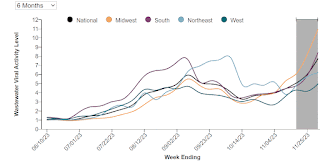
At a Congressional hearing on November 30, CDC Director Dr. Mandy Cohen highlighted a post-Thanksgiving rise in COVID-19 cases, a trend supported by wastewater monitoring.  The innovative  wastewater reporting dashboard , rolled out  in November ,  revamped by the CDC team "Poo's Clues," using SARS-CoV-2 viral RNA concentrations in wastewater, offer insights into the virus's spread, covering over 100 million people across 700+ sites.  A 12% increase in COVID-19 cases was observed from mid- to end of October, with regional variations. The Midwest and West saw significant surges, contrasting with the relative stability in the Northeast and South. By the end of November, West seemingly peaked but then continued upward, Northeast started catching up with Midwest, and numbers kept climbing nationwide  (another 11% increase by the end of November). ( Biobot data show even larger growth  in SARS Cov-2 number, ILInet also reports increasing levels of  in...

Vaccine-Induced Encephalitis

Image
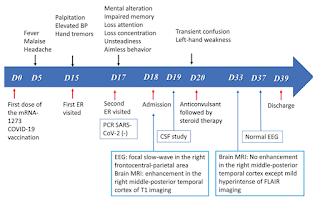
Encephalitis is an inflammatory condition affecting the brain, characterized by the swelling of the brain tissue. This inflammation is often triggered by viral infections, although it can also result from bacterial infections, autoimmune disorders, or vaccination.  Multiple cases have been presented in the literature.  Anti NMDA Autoimmune Encephalitis in a Pediatric Patient: Anti-NMDA receptor encephalitis is a rare autoimmune disorder that affects the central nervous system. In this condition, the body's immune system mistakenly targets and attacks NMDA receptors in the brain. NMDA receptors are essential for normal brain function, and their dysfunction can lead to a range of neurological symptoms. The condition is often associated with the presence of antibodies against the NMDA receptors. The case involves a 13-year-old female who developed anti-NMDA autoimmune encephalitis after receiving the Pfizer–BioNTech COVID-19 vaccine. The patient presented with subacute neurologic...

COVID-19 Vaccination-Induced CRPS Masquerading as Erythromelalgia

Image
New case report describes a 56-year-old woman who developed debilitating symptoms, including intense foot pain, discoloration, and swelling, following COVID-19 vaccination with the Pfizer-BioNTech mRNA vaccine. The patient experienced acrocyanosis, constant pain in the soles of her feet, and a throbbing sensation. Symptoms worsened after each COVID-19 vaccine dose, leading to dependency on a wheelchair. Dermatological manifestations included redness, discoloration, and swelling. Initial evaluations suggested erythromelalgia, but subsequent investigations involved multiple medical specialties, including dermatology, vascular surgery, rheumatology, neurology, and orthopedics. Various diagnostic tests, including blood tests, genetic testing, imaging, and biopsies, yielded inconclusive results. Based on the Budapest Criteria for CRPS, the patient fulfilled the criteria, exhibiting allodynia, hyperalgesia, skin color changes, edema, continuing pain, and the absence of a more obvious ex...

Lamotrigine and COVID-19 Vaccine: A Case of Leukopenia

Image
Leukopenia, a condition characterized by a decrease in white blood cell count, is a medical phenomenon that warrants attention, especially when linked to the initiation of medications. In a newly published case report, a 20-year-old bipolar woman experienced leukopenia following the administration of lamotrigine, next day after COVID-19 vaccine booster, shedding light on potential risks and interactions. Lamotrigine is known for its efficacy in treating bipolar disorder, but like any medication, it comes with potential side effects. Adverse effects are more likely when lamotrigine is used alongside other antiepileptic drugs, during rapid dose titration, or in combination with multiple medications. Monitoring its concentration becomes crucial in such cases, as highlighted in this report. The patient in question received lamotrigine the day after her third mRNA vaccination for COVID-19, presenting with predisposing factors such as concomitant use of antiepileptic drugs. Surprisingly, leu...

Neurological and Oral Complications Following COVID-19 Vaccination

Image
New paper discusses a case report of a 65-year-old woman who experienced neurological complications following the administration of a third dose of the Moderna COVID-19 vaccine. The patient, previously in good health, presented with symptoms that included numbness in the mouth, feet, legs, interscapular space, and hands, along with muscle pain in the lower limbs and interscapular pain. The clinical evaluation by a neurologist revealed distal and asymmetric sensory axonal polyneuropathy predominantly affecting the right lower limb. Electromyography (EMG) and electroneurography (ENG) tests were conducted to assess the nerve function. The study showed an exclusively sensory polyneuropathy of the axonal type with a distal and asymmetric distribution, predominantly in the right lower limb. There were also findings suggestive of neuropathy due to entrapment of the distal segment of the right median nerve in its course through the wrist.  The patient's blood work showed elevated transamin...

Adrenal Insufficiency and COVID-19 Vaccination

Image
Patients with adrenal insufficiency who are on glucocorticoid replacement therapy face unique challenges when it comes to vaccination. In most cases, conventional vaccines like those for the influenza virus don't necessitate an increase in glucocorticoid dose. However, with the advent of COVID-19 mRNA vaccines, there have been reported cases of adrenal crisis in patients with secondary adrenal insufficiency. A new paper explores three cases that shed light on this issue.  Case 1: Idiopathic Isolated ACTH Deficiency A 78-year-old man with idiopathic isolated ACTH deficiency received the second dose of the BNT162b2 mRNA vaccine. He decided not to take hydrocortisone (HC) on the day of vaccination. The following day, he experienced fatigue, nausea, vomiting, and appetite loss. He did not receive HC and ended up in the emergency department two days later, with severe general fatigue, nausea, vomiting, hyponatremia, and relative hypotension. His symptoms resolved a day after administrat...

Olfactory Dysfunction and Hallucinations Following Vaccination

Image
 A 39-year-old veteran, with a history of tension-type headaches, noticed a burning odor sensation approximately three weeks after receiving the J&J COVID-19 vaccine, about four months prior to his visit to the neurology clinic. Concerned about this peculiar symptom, he underwent a nasal swab antigen COVID-19 test, which returned negative. Initially, the episodes occurred daily, lasting about one hour each time. However, as time passed, they became less frequent, shorter in duration, and less intense. About 11 months post-vaccination, milder episodes occurred only 1 to 2 times weekly. These olfactory hallucinations persisted for nearly two years (21 months post-vaccination), occurring randomly throughout the day and unrelated to any other symptoms.  When the veteran presented to the clinic, both general and neurological examinations yielded unremarkable results. Brain magnetic resonance imaging (MRI) did reveal chronic sinusitis but showed no other abnormalities. It's imp...

Plexopathy after COVID-19 Vaccination

Image
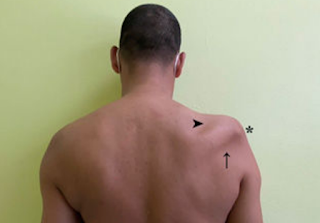
 The lymphatic system in our body acts as a sewage system, filtering out waste and helping fight infections. Axillary lymphadenopathy is a condition where the lymph nodes (small, bean-shaped structures in the lymphatic system) located in the armpit (axilla) area swell up. This usually happens when the body is trying to fight off an infection or in response to certain medications or vaccines. The brachial plexus is a network of nerves that send signals from your spinal cord to your shoulder, arm, and hand. A plexopathy is a disorder that affects this network of nerves, leading to various symptoms including pain, numbness, and muscle weakness in the affected area.  Multiple case reports described lymphadenopathy after COVID-19 vaccination. Previously we talked about vaccine-triggered  Parsonage-Turner syndrome , a rare idiopathic brachial plexopathy in a 50-year old male. 34-year-old healthy male also developed brachial plexus neuropraxia (a mild nerve injury) after ge...

Parsonage-Turner syndrome as a side effect of booster vaccination

Image
A 50-year-old man visited a primary care clinic with persistent right arm pain and weakness lasting for 9 weeks. These symptoms began 5 days after receiving a mRNA COVID-19 booster vaccination in his right deltoid. The patient experienced a moderate-to-severe ache at the injection site, radiating to his neck. Over time, he developed progressive weakness in his right shoulder and elbow, along with occasional hand paresthesia.  Despite reporting his symptoms to Malaysian equivalent of VAERS database, the patient sought medical attention only after 9 weeks when his symptoms worsened to the point where he needed assistance with daily activities. He had no other symptoms or relevant medical history, except for completing two doses of an inactivated COVID-19 vaccine 7 months prior. Physical examination revealed muscle wasting in the affected areas without skin changes or tenderness. Neurological evaluations, including nerve conduction studies and electromyography, indicated axonal loss r...

May Update on COVID-19

Image
Nobody is counting vaccine doses anymore. But COVID-19 is still here, remaining among the top five leading cause of death for older and immunocompromised individuals.  The national public health emergency in the US is set to end on May 11, 2023, with the last states to end statewide emergency orders being New Mexico on March 31 and Rhode Island on April 10, followed by Texas and Connecticut. However, recent events such as the CDC's April 24-27 Epidemic Intelligence Service conference in Atlanta have shown that the virus is still spreading. At least 35 people who attended the conference tested positive for COVID-19, as confirmed by spokesperson  Kristen Nordlund .  According to CDC, Atlanta has a low COVID-19 community level, along with nearly the rest of the U.S. In February,  Dr Deepti Gurdasani   reported her breakthrough case, despite six COVID-19 vaccine doses. Are these repeated doses even helping? There is some evidence they might be helping solid tra...

A New Onset of Ulcerative Colitis post-2nd-breakthrough-COVID-19

Image
A 21-year-old non-smoking Caucasian male with a history of acute pancreatitis but no other medical issues or family history had two doses of the BNT162b2 mRNA COVID-19 vaccine.  Four months after the second dose he had his first episode of COVID-19. Although not hypoxic, he felt pretty unwell for a week, with a severe cough, fever, generalized body ache, headache, and loss of taste. He received the third dose of the vaccine two months after recovering from COVID. Nine months after the third dose, he had the second episode of COVID-19, during which he was mildly unwell for three days, recovered, and did not require any anti-viral medication or antibiotics. One week post the second episode of COVID-19, he developed diarrhea and abdominal pain. It then progressed to bloody diarrhea. Ulcerative colitis was diagnosed based on his clinical symptoms, biopsy changes, and the exclusion of other causes.  There are ten published case reports about the newly diagnosed ulcerative colitis ...

Recurring neurocardiogenic syncope after vaccination

Image
 A 21-year-old Caucasian woman with a medical history of hypothyroidism secondary to Hashimoto’s thyroiditis, chronic migraine headaches without aura, and anxiety disorder presented to the outpatient electrophysiology clinic following three episodes of syncope within three months - one day, 4 week and 8 weeks after the first dose of the Pfizer BioNTech SARS-CoV-2 vaccine. She was placed on a two-week Holter monitor to rule out conduction abnormalities. An echocardiogram revealed normal left ventricular function, normal wall motion, and no evidence of pericardial effusion, but four days later she was found to have been in a normal sinus rhythm that progressed to sinus bradycardia followed by a sinus arrest with no underlying escape for 8.4 seconds that correlated with her syncope. She then had a few beats of sinus bradycardia, followed by another 3.1-second pause of the same mechanism. Since Holter monitoring during successive episodes showed progressive bradycardia followed by...

Polyarteritis Nodosa Following Vaccination

Image
Polyarteritis nodosa (PAN) is a rare, but serious autoimmune disease that affects the medium-sized arteries, can block the flow of blood and nutrients and affect many different organs in the body, including the skin, joints, nerves, kidneys, and gastrointestinal tract.  It is a complex condition with multiple genetic and environmental factors likely playing a role. Genetic factors that have been associated with PAN include variations in MEFV, TNFAIP3, CECR1, DADA2, and ITGB2 genes.  A healthy 59-year-old woman presented to the emergency department with a two-day history of progressively worsening abdominal pain, melena, and postprandial nausea. The patient had no significant chronic medical history and no recent infections. She was recently vaccinated with the second dose of the mRNA-1273 vaccine against SARS-CoV-2 approximately two days before her presentation. Physical examination was significant for diffuse tenderness to palpation of the abdomen with rebound tenderness of ...

Necrotizing Encephalitis and Myocarditis after BNT162b2 mRNA Vaccination against COVID-19

Image
76-year-old man with Parkinson's disease (PD) died three weeks after receiving his third COVID-19 vaccination, 5 months after his second dose (BNT162b2 mRNA vaccine/Comirnaty) and 7 months since his first dose (ChAdOx1 nCov-19 vector vaccine).  On the day of his first vaccination, the individual experienced pronounced cardiovascular side effects, for which he repeatedly had to consult his doctor. After the second vaccination two months later, the family noted obvious behavioral and psychological changes (e.g., he did not want to be touched anymore and experienced increased anxiety, lethargy, and social withdrawal even from close family members). Furthermore, there was a striking worsening of his PD symptoms, which led to severe motor impairment and a recurrent need for wheelchair support. He never fully recovered from these side effects after the first two vaccinations but still got another vaccination in December 2021. Two weeks after the third vaccination, he suddenly collap...

Long VITT

Image
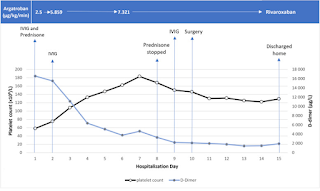
There is an increased rate of coagulation disorders following all COVID-19 vaccines. One example is Vaccine-induced immune thrombotic thrombocytopenia (VITT). It happens when the body's defense mechanisms incorrectly target and kill platelets, small cell fragments that aid in blood clotting. VITT can lead to significant morbidity and mortality due to the various thrombosis-related complications. A 56-year-old man with a history of high blood pressure and high cholesterol developed left leg claudication and a persistent new right calf pain after receiving the first dose of the ChAdOx1 nCoV-19 vaccine, A right leg venous doppler ultrasound confirmed a great saphenous vein thrombosis with an extension to the femoral vein. CT angiogram showed an infrarenal aortic thrombus occluding 50% of the lumen and a left popliteal artery thrombosis without significant atherosclerosis. A CT pulmonary angiogram was done and revealed multiple segmental pulmonary embolisms. Brain imaging showed a cer...

Stroke Among SARS-CoV-2 Vaccine Recipients: cases with unusual presentation

Image
Vaccines and Related Biological Products Advisory Committee met yesterday  (1/26/2023), to continue investigating preliminary data indicating a possible stroke risk following simultaneous administration of the Pfizer Covid booster and the flu vaccine. FDA is launching a study to look into this possibility. Two weeks ago , we reviewed some of the VAERS reports in the 65+ age group. Multiple case reports describing stroke after COVID-19 vaccination have been published in medical literature. Some had unusual presentations.  A 43‐year‐old male patient with uneventful medical history was admitted 23 days after receiving a first dose of ChAdOx1 nCoV‐19 vaccine. Symptoms of headache, falls, and unsteadiness began 7 days after vaccination. At admission, he presented with reduced vigilance, multiple blue, or purple bruises in all extremities and left‐sided hemiparesis. The bruises had the typical clinical characteristics of hematomas after subcutaneous bleeding and were painful, ...