Posts

Showing posts with the label myocarditis

COVID-19 Vaccines and Myocarditis: What Scientists Are Learning

Image
mRNA vaccination can, in relatively rare cases, trigger a spectrum of immune-mediated cardiac effects ranging from transient myocardial inflammation and biomarker elevation to clinically apparent myocarditis, with fulminant myocarditis representing the most severe but least common manifestation A new Stanford Medicine study sheds light on a long-standing question: why do mRNA-based COVID-19 vaccines could cause myocarditis, particularly in young males? Importantly, the findings also point toward possible ways to reduce this risk without undermining vaccine effectiveness. The researchers identified a two-step immune reaction behind vaccine-associated myocarditis. After vaccination, macrophages (frontline immune cells) release a signaling protein called CXCL10. This, in turn, activates T cells, which produce another inflammatory molecule, interferon-gamma (IFN-γ). Together, these cytokines act as a “tag team,” driving inflammation that can directly injure heart muscle cells and attract a...
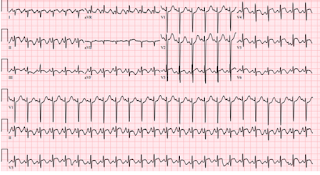
Delayed myocarditis following vaccination

Image
 A healthy 24-year-old man with a history of allergic rhinitis experienced tightness in his chest, difficulty breathing, and coughing up blood six months after exposure to COVID-19 (he never tested positive nor experienced any symptoms) and three months after a second dose of the Moderna vaccine.  On arrival, his oxygen level was low, his heart rate was high, he had a fever, and his blood pressure was normal. He looked very sick and was sweating. Electrocardiography (ECG) showed sinus tachycardia with diffuse ST-segment elevation and T-wave inversion (Figure).   There were abnormal sounds in his lungs despite normal X-rays. His heart's electrical activity showed a fast rhythm with changes in the ST-segment and T-wave. Blood tests indicated heart damage and inflammation. An ultrasound of his heart showed that its pumping ability was reduced. A biopsy of his heart muscle confirmed inflammation Tests of fluid from his lungs showed no signs of bleeding or infection. Diag...

Vaccine-induced Myocarditis and Postural Orthostatic Tachycardia Syndrome

Image
A study published in January 2023 found that people who developed myocarditis after receiving a coronavirus vaccine had significantly higher levels of the virus's spike protein that was not bound by immune antibodies. It was also found in 10% of patients with chronic Hepatitis C up to 28 days after COVID-19 vaccination.  The spike protein may damage the heart's pericytes or endothelium by reducing the expression of the angiotensin-converting enzyme 2 (ACE2), reducing the production of nitric oxide in the endothelium, or activating integrin-mediated inflammation with hyperpermeability of the endothelial cell layer. The study prospectively collected blood from 16 patients with myocarditis who were hospitalized at two hospitals in Massachusetts (2 after the 1st dose, 12 after the second dose, and 2 after the 3rd dose) and compared the results to those from 45 vaccinated control subjects with no serious side effects. The individuals with myocarditis had essentially the same antib...

Fatal myocarditis after vaccination

Image
Thousands of case reports of myocarditis after COVID-19 vaccination have been published in medical literature. Some of them were fatal.  A 27-year-old athletic man was transferred to the emergency room due to cardiopulmonary arrest 8 days after  the first dose of the mRNA-1273 SARS-CoV-2 vaccine (Moderna, Cambridge, MA, USA). His  teammates called for an ambulance   when he was found sitting unconscious during practice. A chest radiograph obtained in an emergency room showed an enlarged heart and  pulmonary congestion (Panel  E). The patient had undergone orthopedic surgery 3 months before the recent hospitalization. An electrocardiogram (ECG)  abnormality and mild cardiac shadow enlargement in chest radiograph had been also noted preoperatively ( Panels  B, D); however, since he was asymptomatic, no further examination was performed. E ndomyocardial biopsy performed before death showed no evidence of myocarditis; therefo...

Acute vaccine-induced-pericarditis after COVID-induced myocarditis

Image
49-year-old woman was diagnosed with myocarditis and pulmonary embolism due to a COVID-19 complication, which led to heart failure with reduced ejection fraction. A month later she received the first dose of  the Pfizer–BioNTech COVID-19 vaccine with no notable side effects. 12 days after her second dose, however, she  presented to a hospital with chest pain, nausea and vomiting. The vital signs included a heart rate of 90 beats per minute and blood pressure of 100/80 mmHg. Pulmonary sounds were absent on the right lung base and there were signs of poor perfusions, such as capillary refill time (CRT) longer than 5 seconds. The initial electrocardiogram showed sinus rhythm, left bundle branch block and left axis deviation.  A computed tomography (CT) angiography ​(showed pleural effusion, larger in the right hemithorax.  Based on the patient’s medical record, this clinical presentation was interpreted as acute decompensated heart failur...

Pediatric myocarditis after mRNA COVID-19 vaccination in Japan

Image
A 12-year-old boy with unremarkable family and personal medical history presented with chest pain after the first dose of BNT162b2 vaccine. One day after vaccination, he developed fever and fatigue, followed by chest pain the next day. At presentation his heart rate was 82 beats/min. Laboratory tests revealed elevated troponin and NT-proBNP. The ECG showed ST elevation in leads I, II, and V3–6 (as shown in the Figure).  Echocardiography revealed a left ventricular ejection fraction of 68%, mild pericardial effusion, and increased epicardial echodensity. A diagnosis of myocarditis after mRNA COVID-19 vaccination was made, and the patient was treated with 30 mg/kg of aspirin and famotidine. On the next day, the chest pain improved, and the troponin I and NT-proBNP levels decreased to 820.4 and 74 pg/mL, respectively. On the fourth day of admission, the chest pain resolved, the troponin I level decreased to 355 pg/mL, ECG was normalized, and cardiac contrast-enhanced magnetic resona...

17-year old boy suddenly dies one month after adverse reaction to BNT162b2 vaccine

Image
On the morning of September 27 2021, a 17-year-old boy was found dead on the floor beside his bed. The autopsy disclosed a “slightly enlarged heart,” but there was no indication of a cardiac condition at the time.  Father of the boy obtained a second assessment after being dissatisfied with the findings of the initial autopsy and forwarded the autopsy report to “a second well-known pathologist in Canada who wants to remain anonymous for fear of losing his job.” He was informed by the pathologist that “the vaccine did kill [his] son.” Myocarditis and other post-vaccination heart problems are widespread in those who have gotten the Pfizer vaccine, with young males having a substantially higher frequency of post-vaccination heart problems than those who have had a COVID infection. The  teenager had acquired the vaccine in attempt to pursue hockey, due to proof of vaccination obligations imposed by minor hockey clubs across the province. Although the local gove...

Myocarditis and Pericarditis following Covid-19 mRNA vaccines in French Population

Image
I n line with results from a cohort study in Nordic countries , analyses of data from France show a significant risk and population burden of pericarditis following the second dose of the BNT162b2 and mRNA-1273 vaccine (Note that cases after third dose have been also reported) The study was based on data of the National Health Data System (SNDS) which covers more than 99% of the French population (67 million inhabitants) .  1612 cases of myocarditis and 1613 cases of pericarditis occurred in France in the period from May 12, 2021 to October 31, 2021. The largest associations are observed for myocarditis following mRNA-1273 vaccination in persons aged 18 to 24 years. Estimates of excess cases attributable to vaccination also reveal a substantial burden of both myocarditis and pericarditis across other age groups and in both males and females. REFERENCES Le Vu, Stéphane;  Bertrand, Marion;  Jabagi, Marie-Joelle;  Botton, Jérémie ; Drouin, Jérôme;  Baricault, Béra...

Irreversible Cardiomyopathy Induced by COVID-19 Vaccination

Image
A 22-year-old Black male with a past medical history of morbid obesity and diabetes mellitus contracted COVID-19 in January 2021. He was managed conservatively as an outpatient with no known complications. Several months following the infection, he obtained the COVID-19 (mRNA-1273) initial and booster vaccines (May and October 2021). One month after the booster vaccine dose the developed left lower quadrant abdominal pain.  The patient underwent computed tomography (CT) scan of the abdomen/pelvis, which demonstrated a new infarction of the left kidney.  Cardiac magnetic resonance imaging (MRI) was performed, which showed a severely dilated left ventricle with severely reduced function. His hospital course was complicated by decompensated heart failure and persistent cardiogenic shock initially requiring ionotropic support and ultimately mechanical support. Despite 43 days of mechanical and ionotropic support, his cardiomyopathy did not improve and required placement of a durab...

COVID-19 Vaccine Injuries including three myocarditis-induced deaths in New Zealand

Image
The Accident Compensation Corporation ( ACC ) of New Zealand has accepted 987 claims for injuries relating to the Covid-19 vaccine, and 68% of those are women. Between the beginning of New Zealand’s vaccine program in February 2021 and April 2, 2022, ACC received 2522 claims, with 987 being accepted, and 297 are still pending. During this period, ACC paid out $1.12 million in compensation.  ACC had accepted 186 claims related to allergic reactions, 103 claims for sprains, 102 claims for contusions. There were 77 accepted claims for cardiac injury, such as myocarditis or pericarditis. In terms of age, the group that lodged the greatest number of claims were those in the 45-49 age bracket. Ethnicity data showed 71% of claims lodged with ACC were from Pākehā, and 9% Māori. Of the 1238 rejected claims, 973 were turned down because ACC deemed there was no injury, and in 119 cases there was no causal link to the vaccine. Three claims have been made for fatal injury – all due to myocardit...

26-year old male dies from myocarditis less than 2 weeks after his first doze

Image
A New Zealand man has died on November 17, 2021, after the Pfizer Covid-19 vaccine 'probably' caused a rare heart problem, authorities have revealed. This happened less than two weeks after taking his first dose on November 5.  A preliminary postmortem examination identified myocarditis, a rare inflammation of the heart muscle, as the likely cause of death and New Zealand's Covid-19 Vaccine Independent Safety Monitoring Board said the issue was 'probably' brought on by the jab. He started feeling 'flutters' a few hours after having his first dose of the vaccine but dismissed the symptoms as stress-related because he was in the process of selling and buying a house as well as planning a wedding. Around 3am on November 17, the couple decided to go to hospital for 'reassurance' but he collapsed while getting ready to go in the bathroom and was later pronounced dead.    The death is only New Zealand's second linked to a known but rare side effect fro...

26 year-old male dies of myocarditis four days after receiving his third booster shot

Image
According to the autopsy report and death certificate obtained by  the Defender , for this 26-year-old male "post-Pfizer Covid  vaccination myocarditis has been identified to cause left ventricular dysfunction” that led to his death.  At birth, he was diagnosed with a rare type of blood vessel abnormality inside the brain called Vein of Galen Malformation. This condition could be caused by mutations in  RASA1 gene - i nvolved in numerous physiological processes such as angiogenesis, cell proliferation, and apoptosis ; regulator of immune B cells TGF-β and  EPHB4 involved in cell migration .     He had 13 brain surgeries, endless MRIs, CAT scans, angiograms, pokes, and a final radiation treatment that was a success in eliminating the  arteriovenous malformation (AVM) . He got his first and second doses of Pfizer vaccine as soon as his age group was eligible. He did not have any side effects. Almost 7 months later he received his third shot o...

The risk of myocarditis in younger males is higher following COVID-19 vaccination than infection

Image
I n younger men <40 years the risk of myocarditis was shown to be higher after vaccination than SARS-CoV-2 infection.  Between  December  1,  2020,  to  November  15,  2021  a  total  of  42,200,614  people  were  vaccinated  with  at  least  one  dose  of  ChAdOx1  (n=20,646,456),  BNT162b2  (n=20,391,600)  or  mRNA-1273 (n=1,162,558) in England. Of these, 38,347,981 received  two  doses  of  either  ChAdOx1  (n=20,059,058),  BNT162b2  (n=17,294,004)  or  mRNA-1273  (n=1,039,919) and 10,978,507 people received a third dose of ChAdOx1 (n=35,608), BNT162b2  (n=10,599,183)  or  mRNA-1273  (n=343,716).  Amongst  people  receiving  at  least  one  vaccine  dose, 5,185,772 (12.3%) tested positive for SARS-CoV-2; 2,834,579 (54.7%) prior to vacc...