Posts

Showing posts with the label mRNA-1273

Vaccine-Induced Encephalitis
Image
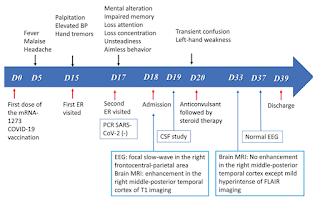
Encephalitis is an inflammatory condition affecting the brain, characterized by the swelling of the brain tissue. This inflammation is often triggered by viral infections, although it can also result from bacterial infections, autoimmune disorders, or vaccination.  Multiple cases have been presented in the literature.  Anti NMDA Autoimmune Encephalitis in a Pediatric Patient: Anti-NMDA receptor encephalitis is a rare autoimmune disorder that affects the central nervous system. In this condition, the body's immune system mistakenly targets and attacks NMDA receptors in the brain. NMDA receptors are essential for normal brain function, and their dysfunction can lead to a range of neurological symptoms. The condition is often associated with the presence of antibodies against the NMDA receptors. The case involves a 13-year-old female who developed anti-NMDA autoimmune encephalitis after receiving the Pfizer–BioNTech COVID-19 vaccine. The patient presented with subacute neurologic...

Neurological and Oral Complications Following COVID-19 Vaccination

Image
New paper discusses a case report of a 65-year-old woman who experienced neurological complications following the administration of a third dose of the Moderna COVID-19 vaccine. The patient, previously in good health, presented with symptoms that included numbness in the mouth, feet, legs, interscapular space, and hands, along with muscle pain in the lower limbs and interscapular pain. The clinical evaluation by a neurologist revealed distal and asymmetric sensory axonal polyneuropathy predominantly affecting the right lower limb. Electromyography (EMG) and electroneurography (ENG) tests were conducted to assess the nerve function. The study showed an exclusively sensory polyneuropathy of the axonal type with a distal and asymmetric distribution, predominantly in the right lower limb. There were also findings suggestive of neuropathy due to entrapment of the distal segment of the right median nerve in its course through the wrist.  The patient's blood work showed elevated transamin...

Delayed myocarditis following vaccination

Image
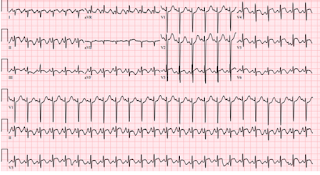
 A healthy 24-year-old man with a history of allergic rhinitis experienced tightness in his chest, difficulty breathing, and coughing up blood six months after exposure to COVID-19 (he never tested positive nor experienced any symptoms) and three months after a second dose of the Moderna vaccine.  On arrival, his oxygen level was low, his heart rate was high, he had a fever, and his blood pressure was normal. He looked very sick and was sweating. Electrocardiography (ECG) showed sinus tachycardia with diffuse ST-segment elevation and T-wave inversion (Figure).   There were abnormal sounds in his lungs despite normal X-rays. His heart's electrical activity showed a fast rhythm with changes in the ST-segment and T-wave. Blood tests indicated heart damage and inflammation. An ultrasound of his heart showed that its pumping ability was reduced. A biopsy of his heart muscle confirmed inflammation Tests of fluid from his lungs showed no signs of bleeding or infection. Diag...

A New Onset of Ulcerative Colitis post-2nd-breakthrough-COVID-19

Image
A 21-year-old non-smoking Caucasian male with a history of acute pancreatitis but no other medical issues or family history had two doses of the BNT162b2 mRNA COVID-19 vaccine.  Four months after the second dose he had his first episode of COVID-19. Although not hypoxic, he felt pretty unwell for a week, with a severe cough, fever, generalized body ache, headache, and loss of taste. He received the third dose of the vaccine two months after recovering from COVID. Nine months after the third dose, he had the second episode of COVID-19, during which he was mildly unwell for three days, recovered, and did not require any anti-viral medication or antibiotics. One week post the second episode of COVID-19, he developed diarrhea and abdominal pain. It then progressed to bloody diarrhea. Ulcerative colitis was diagnosed based on his clinical symptoms, biopsy changes, and the exclusion of other causes.  There are ten published case reports about the newly diagnosed ulcerative colitis ...

Acute disseminated encephalomyelitis

Image
The frequency of CNS neuroinflammatory events reported in the literature after both SARS-CoV-2 infection and COVID-19 vaccination is still largely unknown. While these conditions can occur spontaneously, they have also been reported following vaccinations, including those for influenza, hepatitis B, human papillomavirus, and COVID-19. Viruses and their vaccines  may unmask   CNS neuroinflammatory conditions.   A 47-year-old man with a history of psoriasis and severe acute respiratory syndrome coronavirus 2 (SARS-CoV-2) infection presented with 3 months of subacute lower extremity weakness, erectile dysfunction, and gait instability with falls. His symptoms started 2 weeks after receiving the second of his 2-shot primary mRNA vaccine series for coronavirus disease 2019 (COVID-19) vaccination, which he received 3 months after a mild case of COVID-19. He had no other relevant medical or family history and no recent travel. After evaluation by a urologist, he was prescribed ...

Recurring neurocardiogenic syncope after vaccination

Image
 A 21-year-old Caucasian woman with a medical history of hypothyroidism secondary to Hashimoto’s thyroiditis, chronic migraine headaches without aura, and anxiety disorder presented to the outpatient electrophysiology clinic following three episodes of syncope within three months - one day, 4 week and 8 weeks after the first dose of the Pfizer BioNTech SARS-CoV-2 vaccine. She was placed on a two-week Holter monitor to rule out conduction abnormalities. An echocardiogram revealed normal left ventricular function, normal wall motion, and no evidence of pericardial effusion, but four days later she was found to have been in a normal sinus rhythm that progressed to sinus bradycardia followed by a sinus arrest with no underlying escape for 8.4 seconds that correlated with her syncope. She then had a few beats of sinus bradycardia, followed by another 3.1-second pause of the same mechanism. Since Holter monitoring during successive episodes showed progressive bradycardia followed by...

Chronic Inflammatory Demyelinating Polyneuropathy After COVID-19 Vaccination

Image
Chronic inflammatory demyelinating polyneuropathy (CIDP) is a rare autoimmune neurological disorder that affects the peripheral nervous system. Unlike Guillain-Barré syndrome (GBS) that develops rapidly and reaches its peak within a few weeks, CIDP is a chronic condition that develops more slowly and can last for months or even years. It is characterized by chronic inflammation and damage to the myelin sheath that covers and protects the nerves, leading to symptoms such as weakness, numbness, and tingling in the arms and legs. CIDP is estimated to affect about 1 to 2 people per 100,000 population per year, and it can occur at any age, although it is more common in middle-aged and older adults. Left untreated, 30% of CIDP patients will progress to wheelchair dependence.  A previously healthy 72-year-old man presented with a progressive tingling sensation and weakness below both knees for two weeks that started two weeks after vaccination with the 3rd dose of mRNA-1273. As the ...

STAT3-mediated adverse events following immunization with an mRNA vaccine

Image
Genetic factors that increase the risk of COVID-19 vaccine-induced adverse events are currently being investigated. A new article is presenting a case of T-LGL, T-cell large granular lymphoma, a rare lymphoproliferative disorder, in a patient who received a COVID-19 mRNA vaccine. The authors analyzed the results of gene sequencing for pathogenic mutations but did not find any known variations associated with T-LGL, particularly not in STAT3 or STAT5b, harboring the most common gain-of-function mutations. However, the article provides evidence that the vaccine induces STAT3 activation through TLR stimulation, which may potentially exacerbate STAT3-dependent diseases. Interestingly, expansion of T cells causing progressive lymphadenopathy following mRNA vaccination has been reported in a patient with angioimmunoblastic T Cell lymphoma, indicating that further investigation is needed to understand the potential genetic and immune-related factors that increase the risk of lymphoma after va...

Polyarteritis Nodosa Following Vaccination

Image
Polyarteritis nodosa (PAN) is a rare, but serious autoimmune disease that affects the medium-sized arteries, can block the flow of blood and nutrients and affect many different organs in the body, including the skin, joints, nerves, kidneys, and gastrointestinal tract.  It is a complex condition with multiple genetic and environmental factors likely playing a role. Genetic factors that have been associated with PAN include variations in MEFV, TNFAIP3, CECR1, DADA2, and ITGB2 genes.  A healthy 59-year-old woman presented to the emergency department with a two-day history of progressively worsening abdominal pain, melena, and postprandial nausea. The patient had no significant chronic medical history and no recent infections. She was recently vaccinated with the second dose of the mRNA-1273 vaccine against SARS-CoV-2 approximately two days before her presentation. Physical examination was significant for diffuse tenderness to palpation of the abdomen with rebound tenderness of ...

Stroke Among SARS-CoV-2 Vaccine Recipients: cases with unusual presentation

Image
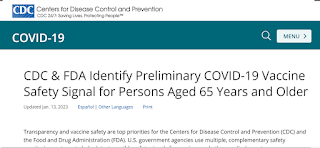
Vaccines and Related Biological Products Advisory Committee met yesterday  (1/26/2023), to continue investigating preliminary data indicating a possible stroke risk following simultaneous administration of the Pfizer Covid booster and the flu vaccine. FDA is launching a study to look into this possibility. Two weeks ago , we reviewed some of the VAERS reports in the 65+ age group. Multiple case reports describing stroke after COVID-19 vaccination have been published in medical literature. Some had unusual presentations.  A 43‐year‐old male patient with uneventful medical history was admitted 23 days after receiving a first dose of ChAdOx1 nCoV‐19 vaccine. Symptoms of headache, falls, and unsteadiness began 7 days after vaccination. At admission, he presented with reduced vigilance, multiple blue, or purple bruises in all extremities and left‐sided hemiparesis. The bruises had the typical clinical characteristics of hematomas after subcutaneous bleeding and were painful, ...

Fatal Breakthrough COVID-19 after Bivalent Booster Dose

Image
70-year-old female with pre-existing conditions (systolic heart failure, A-fib, chronic kidney disease, diabetes, renal disease, ischemic cardiomyopathy, proteinuria, secondary hyperparathyroidism of renal origin, with defibrillator and on warfarin) received her 5th dose of Moderna vaccine (updated bivalent booster) in September 2022. Two months later she tested positive for COVID-19, was admitted to the hospital and died on the 8th day after symptom onset, despite treatment.  76-year-old male with a history of diabetes and coronary artery disease received five doses of the Pfizer vaccine (Dose 1 in January 2021, Dose 2 in February 2021, Dose 3 in October 2021, Dose 4 in April 2022 and Dose 5 (bivalent) on 10/26/22). On 11/2/22, seven (7) days after receiving the Pfizer bivalent booster, patient tested positive for COVID via PCR after being admitted to hospital for unspecified reasons. The patient died on 11/3/22 (8 days after booster) and the cause of death is listed as multiorgan...

Stroke after Pfizer’s updated booster shots

Image
In early January 2023, it become known that the CDC's near real-time surveillance system (the Vaccine Safety Datalink containing health records of more than 12 million Americans) detected a possible increase in ischemic stroke in people 65 and older who recently got one of Pfizer’s ( BioNTech)  updated  booster shots.  It found that 130 seniors had the stroke within 21 days of the shot ( compared with days 22-44 following vaccination ).  This 'met the statistical criteria to prompt additional investigation', the CDC statement said.  CDC officials used an alternative methodology to conduct a different analysis in the VSD database but could not replicate the finding.  They also checked the Center for Medicare and Medicaid Services system, containing 83.9 million individuals, and the Veterans Affairs database, with nine million people. Neither dataset indicated an increased risk of ischemic stroke following a bivalent vaccine.  A large study of updated (...

Ocular side effects of vaccination: neuroretinitis, MEWDS and more

Image
A 78-year-old healthy woman was presented with blurry vision in her left eye 1 day after receiving the third dose of the Pfizer-BioNTech COVID-19 vaccine. The ocular examination revealed an optic disc swelling and retinal thickening of the macula with subretinal fluid in the left eye. The fluorescein angiography revealed hyperfluorescence of the left optic disc. The neuroretinitis resolved gradually after taking azithromycin and prednisolone orally. unilateral neuroretinitis A 30-year-old female was diagnosed with bilateral acute anterior uveitis about a month after Pfizer COVID-19 booster vaccine and was started on prednisolone and cyclopentolate in both eyes. The symptoms had initially improved after a week of therapy, but a couple of weeks later she noticed that the visual acuity in the right eye precipitously dropped, which she described as “smoke” in her vision. She progressed to a serous retinal detachment involving the fovea in the left eye. Unilateral neuroretinitis is often ...

Oral manifestations after COVID-19 vaccination

Image
A 38‐year‐old Thai woman developed painful oral lesions lasting over 8 weeks. The lesions appeared 1 week following the administration of the first dose of AZD1222 vaccine. Her extraoral examination was unremarkable. The intraoral examination revealed generalized desquamative epithelium, erythematous areas along the marginal gingivae and alveolar mucosa. Pseudomembranes, and erosions and ulceration on the buccal gingiva subjacent to the maxillary and mandibular teeth, and the right lingual dorsum could be seen. Furthermore, generalized desquamative epithelium of the alveolar mucosa of the anterior mandibular teeth as well as the right mandibular and left maxillary posterior molars extending to the mucobuccal folds were present. Erythematous areas also extended from the lingual gingiva of anterior mandibular teeth onto the floor of mouth. The histopathologic and direct immunofluorescence examination confirmed a diagnosis of pemphigus. After treatment with a potent topical steroid, fluo...

Multiple Keratoacanthomas Following COVID-19 Vaccination

Image
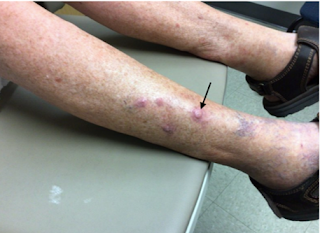
K er ato ac anth omas are a type of skin growth that can be found in people of any age or gender but are more common in older individuals. They are characterized by a raised , round , or dome - shaped les ion that is typically filled with a thick , yellow ish - brown crust y material . Ker ato ac anth omas are typically caused by sun exposure , chemical carcinogens , cancer drugs such as vemurafenib and diabrafenib, recent injury to the skin, and other factors such as genetics and hormonal changes . Human papilloma virus (HPV) has been also suggested as a causal factor. A new case report published in JMIR Dermatology describes a novel case of a healthy 86-year-old man who experienced an eruption of multiple keratoacanthomas 2 weeks after vaccination with the Moderna mRNA-1273 vaccine. 12 days after his second dose of the vaccine, he began to experience severe pruritus of the lower pretibial area, and within 2 days, he noticed red no...